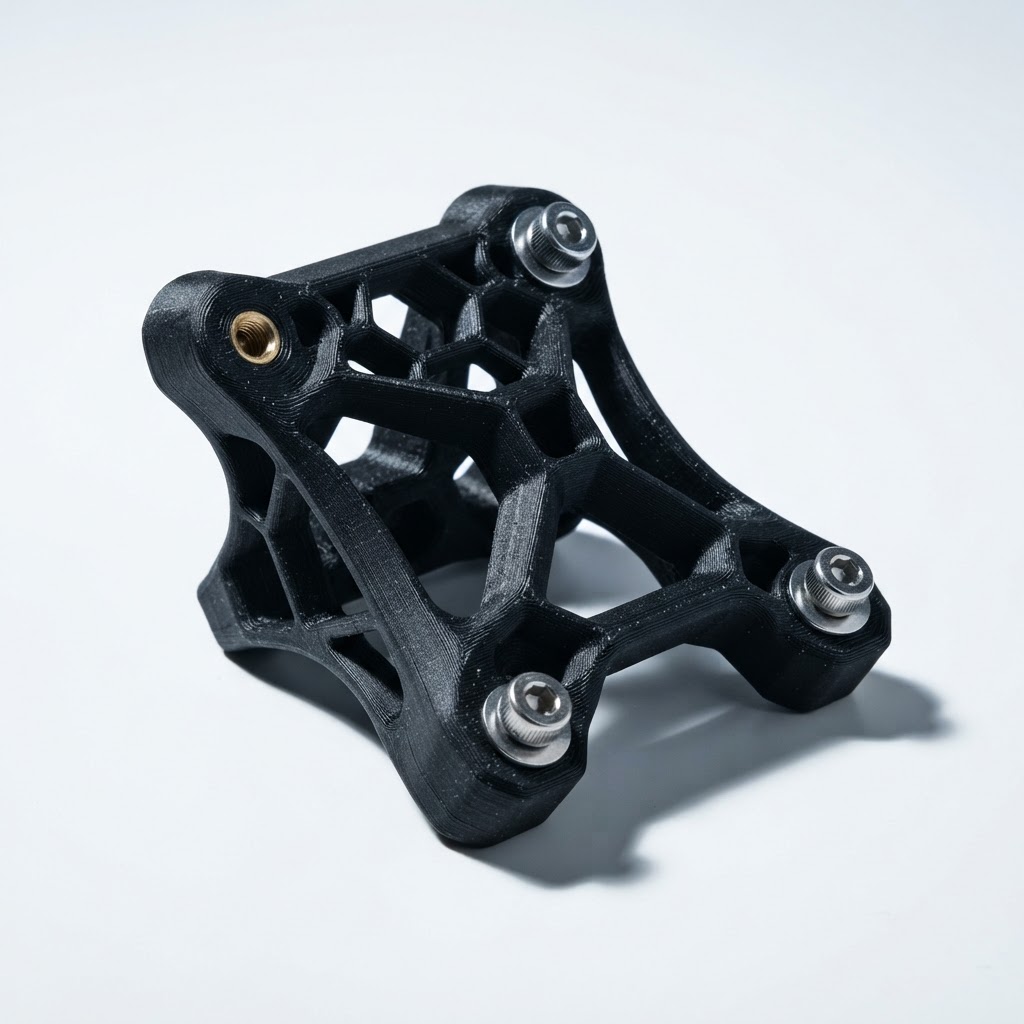
From File to Freedom. Manufacturing at the Highest Level.

Aerospace Printing Systems is a contract manufacturer serving the aerospace community. You supply the CAD file. We produce the part on industrial FDM equipment using aerospace-grade materials and ship it to you with process documentation. Precise, accountable contract manufacturing, from a people who know how they fly.

Precision Contract Manufacturing

Aerospace Printing Systems is a contract manufacturer created for high precision and demanding applications. Our produciton runs on industrial FDM equipment using aerospace-grade materials for components that will perfom at the highest level.  Precise, documented, contract manufacturing.

The general aviation parts supply chain is contracting. OEMs discontinue low-volume components. Distributors exhaust new old stock and do not reorder. Lead times for machined replacements stretch from weeks into months. For experimental aircraft builders and owners, the result is straightforward: your aircraft stays on the ground while you wait for a part that may never arrive from a traditional source.

Additive manufacturing eliminates that wait for a specific class of parts. If you have a design file, APS can have it in production within 48 hours of quote acceptance. No tooling lead time. No minimum order quantity. No inventory to carry. The part exists in your CAD file. We convert that file into a physical, documented component and ship it.

You should not be a compromising on manufacturing quality. APS runs industrial equipment, the same material and equipment classes used in aerospace production environments. Process parameters are logged. Build documentation is available. Parts are produced to published material specifications, not approximations of them. Submit your file. Receive a quote within 48 hours. Approve and we build it.

Industrial Materials and Equipment

There is a fundamental distinction between materials engineered for aerospace production environments and the commodity filaments that populate the desktop printing market. APS operates exclusively at the former end of that spectrum. Every material in our inventory was developed for industries where dimensional stability under thermal load, resistance to chemical exposure, and predictable mechanical behavior under sustained stress are non-negotiable requirements — not aspirational characteristics. These are the same material families specified by defense primes, commercial airframe manufacturers, and medical device producers precisely because their performance envelopes are defined by rigorous published data, not anecdotal field reports.What that means for you as an experimental aircraft builder is straightforward: when APS quotes a tensile strength or a heat deflection temperature, that figure comes directly from the material manufacturer's published specification sheet. We do not interpolate, estimate, or derive from adjacent materials. The number we give you is the number the manufacturer stands behind, produced under controlled test conditions, and the same number your structural analysis should reference if you are evaluating the part for your application. The equipment required to process these materials represents a separate and equally significant distinction. High-performance engineering polymers demand precise, sustained chamber temperatures, tightly controlled nozzle conditions, and build environments that desktop and prosumer printers are physically incapable of achieving. The consequences of processing these materials outside their required parameters are not cosmetic — they manifest as delamination, voids, compromised crystallinity, and mechanical properties that bear no relationship to the published specifications. APS operates industrial FDM equipment purpose-built for these materials, which is the only defensible basis for representing their properties to a customer who intends to install the resulting part in an aircraft.If your application has a defined material requirement, specify it on the quote form. If you understand your operating environment but have not determined the appropriate material, select "Recommend for me" and describe the thermal range, chemical exposure, and load conditions. We will identify the correct material, provide the supporting specification data, and document the basis for the selection in your quote.